Balraj Sahni
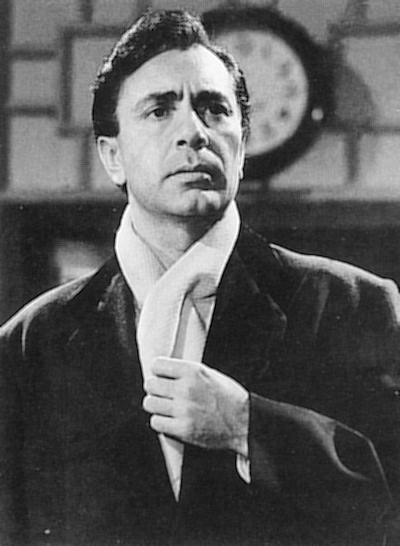
Balraj Sahni
Balraj Sahni never fitted into the idiom of the conventional hero — nor did he want to. All of 40 when he won lasting fame as the downtrodden but optimistic peasant, Sambhu Mahato in Do Bigha Zameen (’53), Balraj is remembered for his efforts to champion a nascent art movement with Garam Coat, Seema, Anuradha and Kabuliwala.
He possessed a genuine social conscience and was something of a left wing intellectual, moving outside the main axis of Bollywood. His performing roots went back to IPTA or the People’s Theatre, where he worked along with several noted communist thinkers. Balraj’s first film, Dharti Ke Laal (’47), came about when the Indian Government, licensed IPTA’s K A Abbas to make a socially relevant film. Set in the days of the Bengal famine, Dharti Ke Laal won accolades for Balraj’s performance as a peasant but did not serve to propel his film career forward.
Balraj went back to doing theatre at IPTA which, by now, had became a political hotbed for communists. In 1951, as part of a Government campaign against communists, Balraj too was arrested. Given special permission to shoot for his film, Hulchul, Balraj would be escorted to the sets by the police. Fortunately, he was released not long afterwards and went on to attract attention for his role as an unemployed youth in Hum Log (’51).
His easy communion with the audience was noticed by Bimal Roy and he signed Balraj for Do Bigha Zameen (’53). A one-time professor of English at Shantiniketan, Balraj vibed well with the Bengali Roy, especially after he dropped his sophisticated air and showed himself willing, and able, to portray the grimy son of the soil toiling in the steamy squalor of Calcutta. Do Bigha Zameen was a survival story of almost Darwinian intensity as Balraj is shown fighting against all odds to preserve his little plot of farm land. In the unforgettable culminating sequence, the wretchedness of human defeat is writ large on Balraj’s face when he sees the factory built on his land, its chimney smoking away his dreams.
After this tour de force performance, Balraj dabbled in commercial films acting opposite Nargis, Meena Kumari and Nutan and did character roles in hits like Ek Phool Do Mali and Waqt. But his portrayals were best when he was studying and intellectualizing his roles — for Do Bigha Zameen, he had plied a rickshaw on the streets of Calcutta for 15 days (with son Parikshit and daughter, sitting in it). He lived for a month with the Kabuliwalas in a Bombay suburb to prepare for Kabuliwala (’61). To get into the skin of the role, he was one actor who was not afraid to let his own skin peel off.
His final triumph came just before his death with M S Sathyu’s Garam Hawa (’73), where he played the patriarch in a Muslim family living in a country ripped apart by communal frenzy and partition riots. The weight of the world lay embedded in Balraj’s creased features as he implicated us in the national identity crisis of a hapless Muslim forced to choose between India and Pakistan. It was befitting that Balraj took his final bow in a superior film that enshrined his art.
 ABOUT THIS AUTHOR
 Cineplot Music
 Cineplot Photo Gallery
 Ayaz Naik
 Suchinda
 Gone with the Wind (1939)
 Stars at Home - Ashok Kumar - Quiet Retreat Of A Busy Star (1955)
 Bollywood hails Ranbir Kapoor as youngest superstar
Reply