Raj Kapoor – The Birth of The Tramp
____________________
Back to Legends – Raj Kapoor
____________________
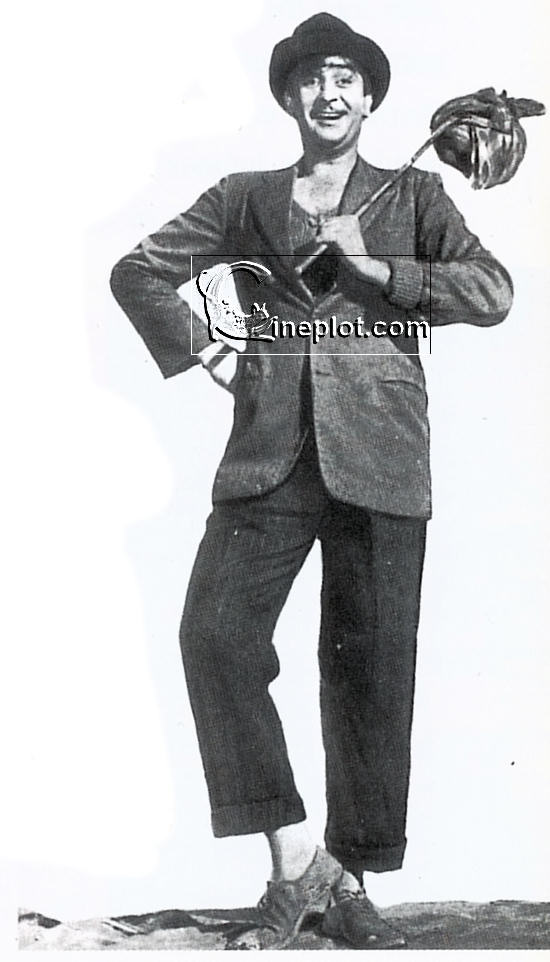
Raj Kapoor - The Birth of The Tramp
Raj Kapoor’s third magnum opus was Awara. This movie played a very important role in his career, as it gave birth to the quintessential Raj Kapoor persona, which he is best remembered by even today.
Awara was responsible for many firsts in Raj Kapoor’s life. He got into attire, which was to remain with him throughout his life; rolled-up trousers, hat, torn shoes and the Chaplinesque tramp was born. Raj had been strongly influenced by Charlie Chaplin’s ideas and characters and it was from Awara that the Indian Chaplin came into being. The character remained throughout Raj Kapoor’s films till his death.
Ironically, apart from the birth of the lovable tramp, Awara also marked the beginning of Raj Kapoor’s flirtation with the spectacular, of his magnificent showmanship. The film had the most amazing song picturisations, which are still cited as landmarks. The dream sequence in `Ghar aaya mera pardesi, pyas bujhi meri akhiyan ki…..’ took three months and exorbitant amounts of money to picturise. It was elaborately shot, on thirteen sets, choreographed by Madame Simki and seduced the imagination of viewers everywhere.
It is said that RK Studios was not even fully built but the sets for Awara were created by his art director M.R. Achrekar on an entire floor. This song, which lasted nine minutes on screen, played an important role in helping the hero to arrive at a moral decision for resolving the dilemma he was facing. This was song picturisation at its creative best.
Raj Kapoor’s relationship with Nargis had already been established in films like Aag, Barsaat and Andaz. The reel life love spilled over into their personal life and Awara gave ample proof of the compulsiveness of their love. The screen came alive when the two appeared together and no one could fail to notice their comfortable intimacy. Raj’s romanticism, his intense love scenes and his imaginative picturisation of them, thrilled the audiences.
The couple became a rage. Nargis became an essential part of the RK establishment. Raj Kapoor later said, “The RK emblem is a reflection of her contribution to the studio. RK ke har set mein Nargis ki mehnat our lagan chhupi hui hai.”
Awara also entrenched Raj Kapoor and Nargis in the hearts of the audiences everywhere, particularly in Russia. Though it was released in 1952 in India, it was shown in the USSR in 1954 as Brodigaya. It became a hit overnight. They dubbed the film in various languages. Even the songs were translated into different languages and sung on the streets by the people.
Satyajit Ray’s Pather Panchali was also released in 1954. Apparently, when Raj Kapoor saw the movie, he was dumbfounded and wanted Ray to direct a film for RK Productions. But Ray refused saying that he was not comfortable with the Hindi language. But just as Pather Panchali became a classic with the elite, Awara became a classic with the common man. Its very basic ideas, its vociferous tirades against the imbalances in society and the moral decadence around, appealed to all. This was Raj Kapoor, the entertainer at his most expressive. He never made his audiences jump intellectual hoops to understand his cinematic idiom. It was overt and obvious — always easily understood – Lata Khubchandani
 ABOUT THIS AUTHOR
 Cineplot Music
 Cineplot Photo Gallery
 Ardeshir Irani (1886 - 1969)
 Bollywood - Year by Year - 1932
 Sajjad Hussain
 Lollywood - The Period full of Ups and Downs - (1991-1999)
 Ingrid Bergman (1915 - 1982)
Reply